
Wingfin / Use cases
Where reasoning on the road matters.
Six areas where richer driving context can support clearer decisions.
Explore the use cases Road network / Denys Nevozhai / Unsplash
Commercial
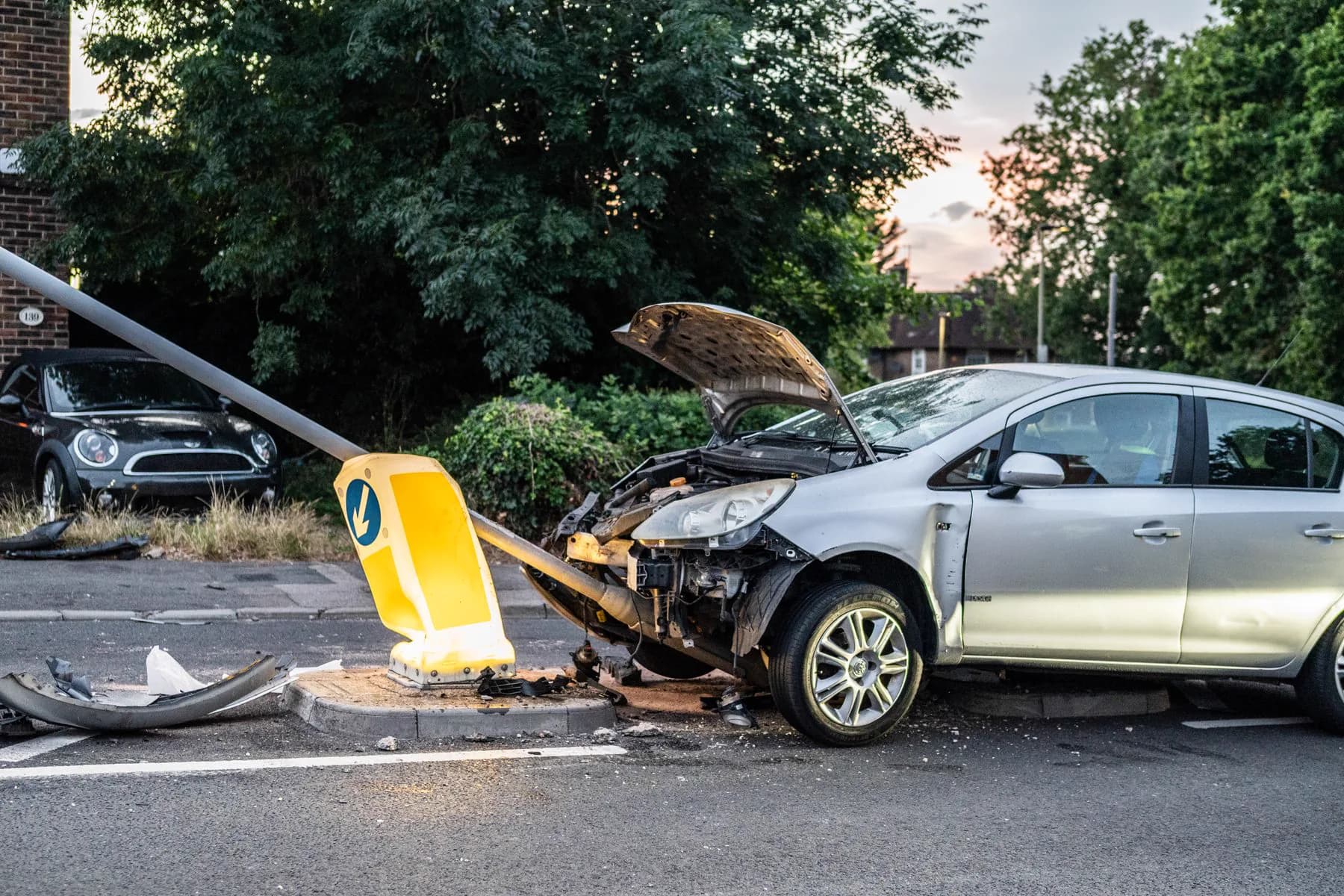 Perception · Vehicle state · Recent context / Boost Media-Marketing / Pexels
Insurers
How can insurers understand the risk of assisted and autonomous driving?
Edge shows how a vehicle is driven. Nexus shows why an autonomous vehicle acted.
Premiums and claims still depend on how people drive. As software takes on more of the driving, insurers also need to understand how the system behaves, and what it was responding to when something went wrong.
Wingfin gives insurers driving evidence they can evaluate, in four areas. Two apply to the vehicles insured today. Two grow in importance as autonomy spreads.
Today
- 01More informed premiums
Edge retrofits onto existing vehicles and builds a record of how each one is driven. Insurers can price on that behaviour, and reward safer driving, instead of relying only on proxies such as age or claims history.
- 02Clearer incident analysis
The road ahead and the vehicle’s speed show how a situation developed before impact. Assessors start from evidence, not competing statements.
Toward autonomy
- 03New actuarial methods
When software makes driving decisions, risk depends on how the system behaves. Nexus shows what an autonomous vehicle perceived and why it acted, giving actuarial teams a new kind of data to evaluate.
- 04Insurer-to-insurer coordination
An autonomous-vehicle incident can involve the vehicle’s insurer, the fleet operator, the automaker and the autonomy provider. Consistent, machine-readable incident records give every party the same account to work from, and could support automated claims exchange over time.
Relevant Wingfin technology
 Cameras & LiDAR · Driving behaviour · Vehicle & route context / Nigel Tadyanehondo / Unsplash
Fleet management
How can fleets spot risky driving before it turns into a claim?
Edge shows how every vehicle is driven, and how each event developed.
A harsh-braking alert tells a fleet manager that something happened. Without the road ahead in view, it can’t show whether the driver avoided a hazard or caused one.
Wingfin pairs what the vehicle saw with how it moved, so each event arrives with its context. Edge brings this to the vehicles a fleet already runs. Horizon, with six surround cameras, gives autonomous fleets a fuller view of each event.
What fleet operators get
- 01Behaviour across the fleet
See which drivers and routes carry the most risk, and focus coaching there.
- 02Lower running costs
Find habits such as repeated hard braking that raise fuel use and vehicle wear.
- 03Clearer incident review
Review what happened with the scene in view, and support automated claim filing.
- 04Evidence for premiums
Fewer incidents and clearer risk evidence may help reduce insurance premiums.
Relevant Wingfin technology
Commercial + Consumer
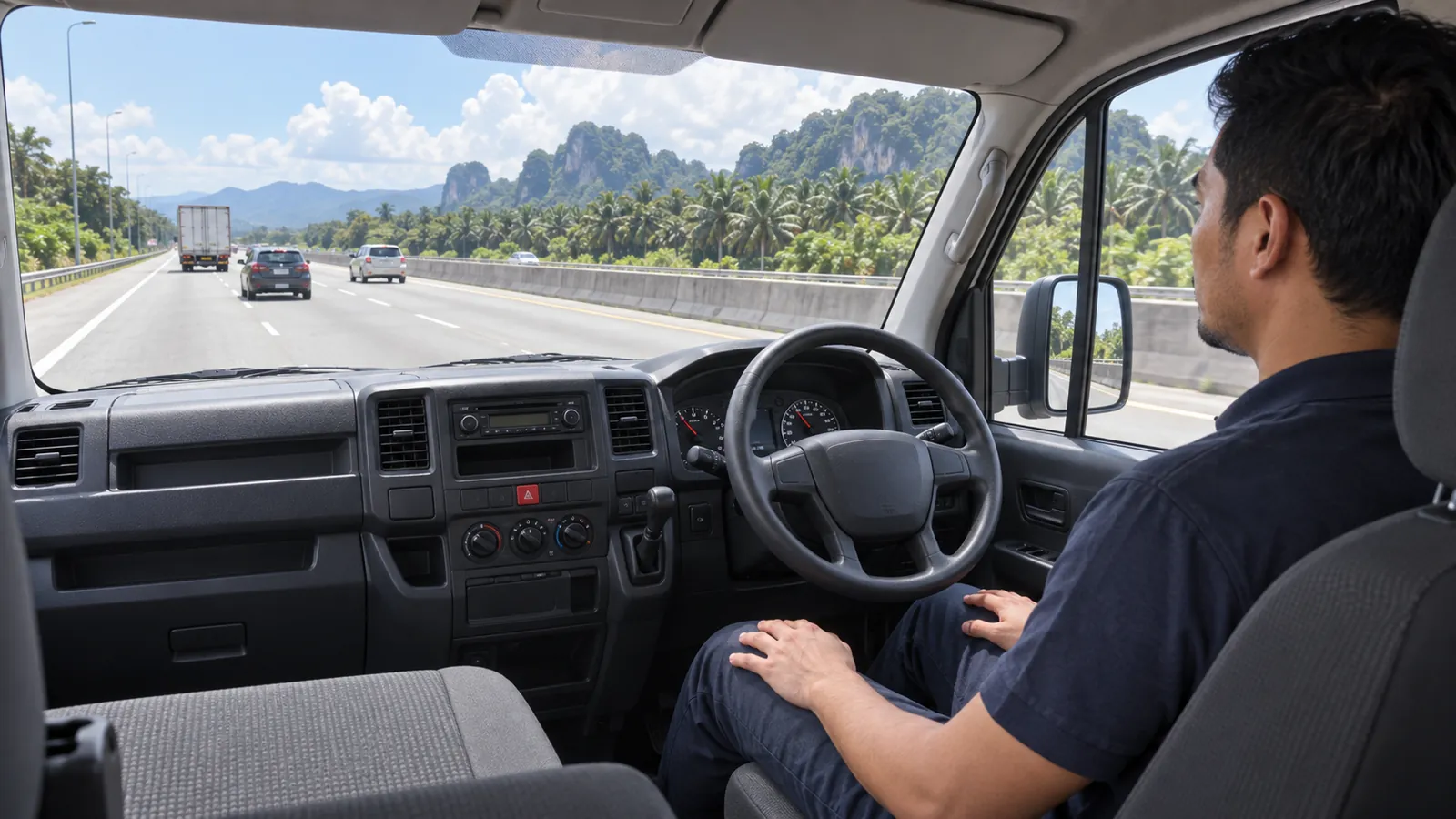 Cameras · LiDAR · Vehicle intent / Illustrative image / AI-generated
ADAS for commercial vehicles
How can a fleet give its drivers modern assistance without replacing its vehicles?
Edge retrofits driver assistance onto the vans, trucks and delivery vehicles a fleet already runs.
Driver-assistance advances usually arrive with new vehicles, built in by the automaker. For a fleet operator, that means waiting for the next replacement cycle, or retiring vans and trucks that still have years of service left.
Edge is a low-power system designed to retrofit onto commercial vehicles already in service. It needs only a forward camera and the vehicle’s speed, so it can reach the older vans and trucks conventional ADAS was never designed for.
What drivers and fleet operators get
- 01Safety alerts
Warnings that help drivers respond to hazards on the road ahead.
- 02Highway lane following
Less effort for drivers on long highway runs.
- 03Traffic-jam assistance
Help through the stop-and-go traffic of urban delivery routes.
- 04A route to lower premiums
Clearer evidence of safer driving across the fleet could support lower insurance premiums over time.
Relevant Wingfin technology
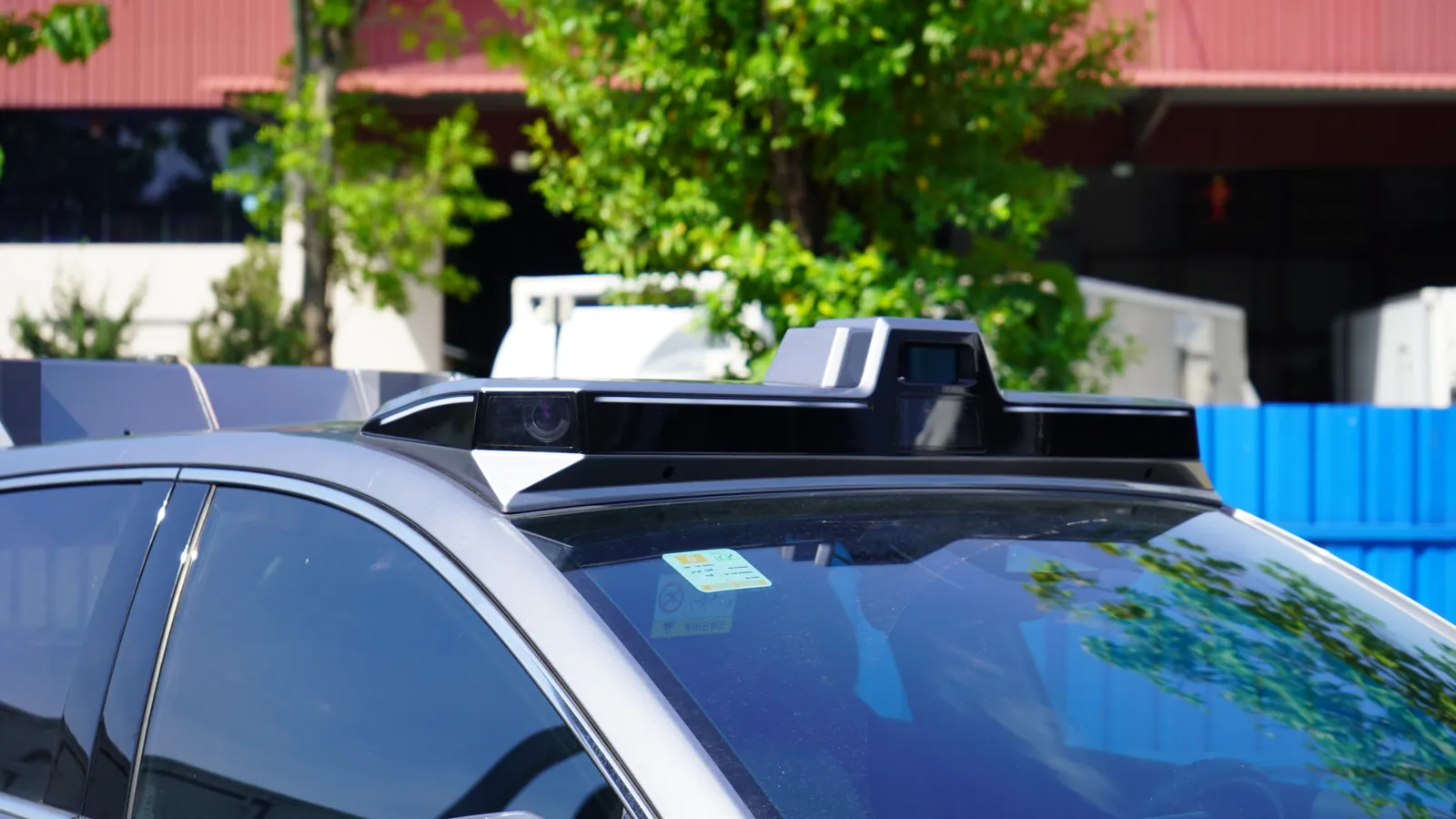 Perception · Temporal context · Navigation / Wingfin
Autonomous driving
How do you build an autonomous vehicle you can explain?
Horizon for high-performance driving. Nexus for decisions you can explain.
An autonomous-driving programme needs more than sensors and vehicle hardware. It needs a software brain that brings perception, recent history, vehicle state and navigation together, then turns them into a driving decision.
Horizon is Wingfin’s high-performance system for automakers, designed to integrate with your vehicle platform and take on more demanding roads and manoeuvres. Nexus is anchored in explainability. It shows development teams what the vehicle perceived, what it decided and why, so unexpected behaviour can be traced to a cause instead of guessed at.
What your programme gets
- 01A driving brain for your platform
Designed to integrate with your vehicle, not replace it.
- 02Reasoning, not only reaction
Decisions that draw on what came before, not just the current moment.
- 03Traceable behaviour
See what the vehicle perceived and why it acted when reviewing a scenario.
- 04Answers you can share
Explanations insurers, regulators and customers can follow.
Relevant Wingfin technology
Governance + Society
 Decision evidence · Road context · System behaviour / Mikhail Nilov / Pexels
Regulators
How can regulators oversee autonomous systems that work like black boxes?
Nexus makes an autonomous vehicle’s decisions reviewable.
Regulators have to protect the public without stalling a new industry. That balance is hard to strike when a vehicle’s decisions can’t be inspected.
Nexus shows what an autonomous vehicle perceived, what it decided and why, in terms people can understand. That gives regulators a clearer basis for assessing system behaviour and risk, and for setting rules in proportion to it.
What regulators get
- 01Visible decision-making
How a system interpreted a situation, not only what it did.
- 02Incident investigation
The reasoning behind an incident, alongside the outcome.
- 03Proportionate rules
Requirements based on observed behaviour, balancing safety, public interest and market development.
Relevant Wingfin technology
 Perception · Decision rationale · Outcome / Khairi Harry / Pexels, AI-edited
Public trust
How can automakers give people confidence in vehicles that drive themselves?
Nexus lets an autonomous vehicle explain itself.
People are slow to trust what they can’t understand. When an autonomous vehicle is involved in an incident, a black-box answer damages confidence in the vehicle and the brand behind it.
With Nexus, an automaker can show what the vehicle perceived, what it decided and why. That turns an incident into a clear account rather than a statement, and lets automakers compete on accountability as well as performance.
Relevant Wingfin technology
A practical conversation
Have a question that isn’t here?
Tell us what you need to understand about your vehicles, fleet or programme. We’ll tell you which Wingfin product fits, or whether none does yet.
Ask us your question